How to lose weight permanently: expertise from Dr. Séverine Mazur, a doctor specializing in obesity
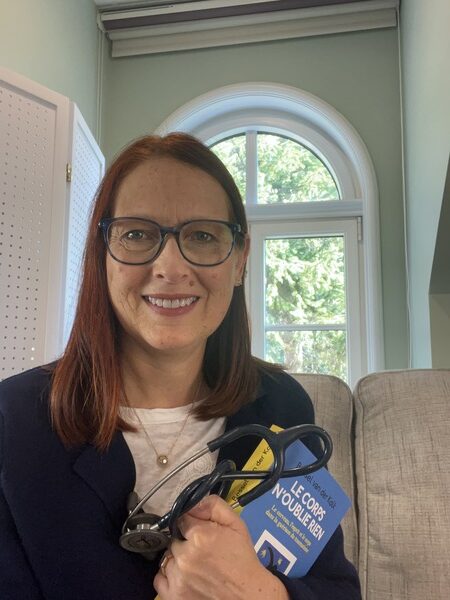
Sustainable weight loss should never start with a new diet. In medical practice, Dr. Séverine Mazur, As an obesity specialist, the challenge is not to “hold on” for a few weeks, but to understanding the body, securing the process, and building a stable health approach.
The goal is not a brutal transformation, but a realistic path that protects the person, their habits, their mind, and their future.
In this article, you will discover a clear and lasting approach based on a central idea: Nutrition, in the context of obesity, is part of the treatment.
1) Forgetting the diets: the basis of lasting weight loss
To seriously talk about weight loss, it is essential to set aside what seems “logical” at first, but which almost always fails in the long run: diets, strict rules and regimes.
The scientific studies are clear: Encouraging dietary restriction and rigidity is not a sustainable strategy. Dr. Mazur emphasizes a fundamental point:
- The restriction often leads to failure, Because it destabilizes the body, increases frustration, and then fuels a rebound in weight gain.
- Food addiction is not treated as an addiction where one can “stop completely”; because You can't stop eating.
The medically recommended direction today is Nutritional therapy, That is, an eating pattern that is conceived as a therapeutic pillar in the same way as medical or psychological follow-up.
2) Relearning to eat: reconnecting the body, hunger, and satiety
“Eating well” is not just about choosing “healthy” foods. It is first and foremost about knowing what we are doing when we eat.
However, in obesity, it is common for people to be:
- disconnected from their bodily sensations,
- sometimes disconnected from their emotions,
- and have a strong potential for food dependence.
The issue is therefore not only nutritional: it is also Sensory and behavioral.
Dr. Mazur recommends bringing the person back to a simple and concrete understanding:
Understanding what really fuels satiety
The most effective approaches allow patients to understand:
- how food affects satiety,
- how they contribute to the maintenance of muscles,
- and how they can support the natural regulation of hunger.
Gradually, the person improves their food knowledge, learning to:
- it would be better to read what she buys,
- avoid ultra-processed products that are too fatty or too sweet,
- make more consistent choices at the grocery store.
It’s not a strict rule: it’s a autonomy that is being built.
3) Hydration: an underestimated lever to better regulate appetite
Hydration is a simple but particularly important point in weight management.
Some people living with obesity may experience sometimes confusing internal signals. It happens that they:
- they confuse thirst with hunger,
- They misinterpret certain sensations.
Thus, learning to hydrate daily It is part of the dietary rehabilitation.
It’s not a detail: it’s a strategy that helps reduce automatic eating patterns and clarify body signals.
4) The first real step: organizing the diet to reassure the body
Dr. Mazur proposes a very concrete approach:
organizing daily eating to reassure the body.
The body needs to feel that it is safe in terms of food.
When a person skips meals, waits too long, or eats in an unpredictable manner, this can amplify:
- the frivolities,
- loss of control,
- impulsive food decisions.
Respecting hunger at the right time
A simple rule: eating when hunger appears, without waiting for it to become unsustainable.
Many patients explain that:
- in the morning, they are not hungry and skip breakfast,
- Then the hunger becomes very intense around noon.
In this case, a useful strategy might be to stop fasting in the middle of the morning, In order to:
- achieve a more stable satiety,
- and bring the hunger of lunch back to a more comfortable intensity.
This type of adjustment is nothing like a regimen: it is a smart adaptation to the body’s truly physiological needs.
5) Proteins and satiety: a simple and powerful pillar
Among the key recommendations of Dr. Séverine Mazur, one stands out with great effectiveness:
increase protein intake consistently at each meal.
Why? Because the most satisfying foods are:
- the proteins
- the fats
In an eating plan inspired by the Canadian Food Guide, the first effective step is to aim for: a good supply of protein at every meal.
How much protein per day?
- A sedentary person can aim for about 1 g of protein per kg of body weight per day.
- From a weight loss perspective, slightly increasing this amount can help to:
- to support hunger,
- to reassure the body,
- limit muscle loss.
- to support hunger,
Example:
- A person of 90 kg should consume at least 90 g of protein per day.
6) The eating schedule: 3 meals + 1 to 2 snacks (if necessary)
Sustainable weight loss is not just about “what to eat”, but also when to eat.
Dr. Mazur often recommends a basic rhythm:
- 3 meals per day
- and 1 to 2 snacks according to needs
This rhythm corresponds to the natural functioning of the body in most people:
Eat about every 3 to 4 hours.
The goal remains the same:
- stabilize the body,
- reduce the food emergency,
- reduce the gaps that result from too intense hunger.
7) Moderation: going further rather than “holding on”
Dr. Mazur summarizes this logic with a simple idea:
Everything is within the limits.
Sustainable weight loss does not come from perfection, but from consistency.
“Eating a little of everything, in moderation” often allows:
- more serenity,
- less guilt,
- better stability over several months.
8) Sleep, stress, Hormones: what influences weight loss beyond calories
Even with a well-structured diet, other factors strongly influence weight.
Sleep: a pillar too often neglected
Quality sleep (duration + rhythm) has a favorable influence:
- the loss of weight,
- maintaining weight.
Dr. Mazur reminds us that:
- to sleep less than 6 hours
- or more than 9 hours
They increase the risk of weight gain.
The reasons may include:
- the stress of too long days,
- sedentary lifestyle combined with very long nights,
- a global disruption of the regulatory signals.
Sleep apnea: essential screening for obesity
Every person with obesity should consider testing for sleep apnea, because:
- deteriorates the quality of sleep,
- promotes weight gain.
Useful tools for detecting apnea include:
- the Epworth scale
- the circumference of the neck
- above 48 cm : increased probability
- Below 37 cm : probability reduced
- above 48 cm : increased probability
- and some factors such as: snoring, hypertension, sex, signs of drowsiness.
9) Metabolism, Genetics and the “Set Weight” Theory: Why the Body Resists
The body naturally seeks balance between:
- the energy intake (what we eat),
- and the expenses (what we consume).
When income exceeds expenses, the body stores it.
Over time, the highest weight becomes a form of internal reference: the set-point weight.
Why weight loss becomes more difficult after a drop
When weight loss occurs, the body may interpret this as a signal of danger (such as a disease).
He reacts by:
- by slowing down the basal metabolism,
- by conserving energy in reserve,
- favouring a return to the standard weight.
Genetics also plays an important role:
more than 140 genes are involved in weight management.
That is why, according to Dr. Mazur, the changes Progressive and slower They are often more effective:
- they respect the body,
- support the acceptance,
- and increase the chances of installing a new “well-being weight”.
10) Measuring weight loss in health: beyond the scale
The balance sheet figure is not the best indicator of health.A very useful indicator is:
Waist circumference (in cm)
Especially if the person increases their physical activity, because:
- abdominal fat mass decreases,
- muscle mass can stabilize or increase,
- The waist circumference decreases even though the weight does not decrease as much (or increases).
Other tools exist (depending on the case):
- impedance balance
- lipodensitometry
The real progress may therefore be invisible on the balance sheet, but very visible on health.
11) Physical activity: a health tool, not a punishment for losing weight
Dr. Mazur is very clear:
The goal of sports is not weight loss.
In a weight management approach, physical activity primarily serves to:
- protecting muscle mass,
- supporting overall health,
- improve the body's ability to function effectively.
The risk when losing weight is that you will lose:
- of fat and also
- muscle
However, losing muscle is not desirable.
Beware of the hunger signal after exercise
After an activity, the body often sends a signal of hunger to “recharge”.
In the context of a weight loss goal, this signal must be consciously moderated through strategies such as:
- choosing good post-workout snacks,
- drink plenty of water,
- rinse if necessary.
What activities are sustainable?
Moderate activity is often enough to:
- maintain muscle mass,
- encourage the body to use energy without storing it.
Possible examples:
- march
- Active housekeeping
- bicycle
- dance
- skate
- move in a way that suits the person
To strengthen the body, Pilates can be useful for deep abdominal training:
10 to 30 minutes per day may be enough.
The more compatible the activity is with a normal life, the more likely it is to be maintained.
12) Common myths about weight loss that need to be debunked
Myth 1: “Balance = happiness”
Weight can be a central point at the beginning, and that’s normal.
But sustainable health takes hold when the person discovers a broader vision:
- balanced diet
- psychic balance
- physical balance
- calmness
Myth 2: “You have to be strict to succeed”
Restraint is often the basis of failure.
In obesity, the solution is not rigidity, but:
- the compromises,
- the choices,
- stability.
Myth 3: “I have to exercise to lose weight”
Sport helps health, muscles, organs, and reduces several risks.
But the main goal is not weight loss.
Myth 4: “I have to get there on my own”
Asking for help is not a failure or a weakness.
Obesity is a chronic, progressive disease: the body fights against weight loss.
Sometimes support is needed.
13) Medical follow-up and psychological support: ensuring a safe journey
Dr. Mazur explains that medical follow-up serves to:
- to secure weight loss,
- monitor vital signs and biological parameters,
- prescribe examinations,
- perform essential screenings,
- recommend an appropriate activity,
- Offer medication when necessary.
She also seeks to identify certain elements often associated with obesity:
- sleep apnea
- female hormonal challenges
- ADHD
- hyperphagic access disorder
- depression
- anxiety disorder
- daily food organization
Why psychological support is essential
Especially at the beginning, because it allows:
- to identify what is blocking the process,
- to create appropriate support,
- to accommodate the challenges that emerge along the way.
- medications
- PNL
- hypnosis
- EFT
- gastric balloon
- food replacements
- surgery
14) Scientific discoveries that transform our understanding of obesity
According to Dr. Mazur, understanding the pathophysiology of obesity is a major advance.
Among the important mechanisms:
- an imbalance in communication between the brain and fat cells
- The role of leptin and ghrelin in hunger and satiety
- the dysfunction of the reward loop in emotional, compulsive, or anxious eating
- a better understanding of bulimic hyperphagia
- The concept of the weight of the consignee
- re-gain mechanisms after diets and rapid weight loss
These discoveries show why Food and physical activity alone are not always enough to “cure” obesity, and why the strategy must be comprehensive.
15) What distinguishes the patients who progress the best (beyond the result)
According to Dr. Séverine Mazur, the best indicators of progress are:
- the sustainable installation of habits with less effort
- the constancy of the routine
- the ability to let go of constraints
- The movement resumed with pleasure, even at a minimum level
- The return of social life
- a form of inner calm, a presence within oneself
- the presence of pleasure in the journey
- a clear and stable health goal
Conclusion: Losing weight permanently means regaining security and consistency
The approach of Dr. Séverine Mazur, The doctor of obesity does not rely on absolute control, but on understanding, stability, and care.
Losing weight permanently means:
- stop fighting against your body,
- learn to listen to it,
- structure a reassuring routine,
- protecting his muscles,
- sleep better,
- to have someone accompany you,
- and progress at a pace that respects the reality of the disease.
It is a medical, psychological and human process, which aims less at immediate performance… than at long-term peace.